Virtual Reality & Gaming Metaverse Directory

The Landscape of Virtual Worlds

From social immersion and decentralized spatial real estate to continuous creator economies—examine the platforms defining human interaction across 3D digital realities.

Leading Platforms & Metaverses

Evaluating active users, hardware integration, and world-building capabilities across key environments.

VRChat user-created social world environment
Social VR Pioneer

VRChat

Full Immersion & Custom Avatars

The foremost user-driven social VR ecosystem. Creators leverage the Unity-based SDK to generate custom avatars, full-body tracking arenas, live music venues, and community-driven games.

  • Primary Hardware: PC VR, Meta Quest, Desktop
  • Economy Model: Creator Subscriptions
  • Engine Baseline: Unity / Udon Scripting
Second Life virtual avatar community
The Original Digital World

Second Life

Persistent Real-Money Economy

Operating continuously since 2003, Linden Lab's pioneer space maintains a self-sustaining economy denominated in Linden Dollars (L$), with deep real estate ownership and custom fashion markets.

  • Primary Hardware: Desktop (PC/Mac)
  • Economy Model: Linden Dollars (USD Pegged)
  • Engine Baseline: Proprietary Prim/Mesh & LSL
Decentraland browser-based metaverse overview
Decentralized Web3

Decentraland

Browser-Based Digital Real Estate

An Ethereum-based 3D virtual platform where land parcels (LAND) and avatar accessories are verifiably owned via distributed ledgers and governed by community DAO protocols.

  • Primary Hardware: Web Browser / Desktop Client
  • Economy Model: MANA Token / ERC-721 Assets
  • Engine Baseline: Decentraland SDK / BabylonJS
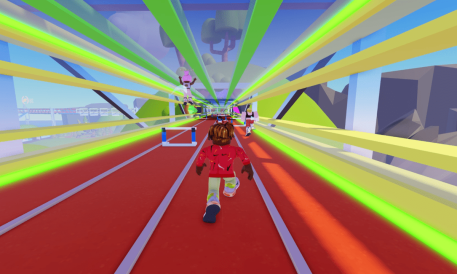
Roblox immersive virtual world space
Massive Multi-User Ecosystem

Roblox

Multi-Platform Game Creation Hub

A global creation engine running millions of concurrent spaces. Featuring native VR integration on supported headsets, developers build multiplayer games monetized through the Robux developer exchange.

  • Primary Hardware: PC, Mobile, Consoles, Quest VR
  • Economy Model: Robux / DevEx Cash-Out
  • Engine Baseline: Roblox Engine / Luau
Meta Horizon Worlds virtual reality social hub
Standalone Spatial VR

Horizon Worlds

First-Party Social Ecosystem

Meta's flagship spatial networking suite built natively for standalone Quest hardware. Users build live interactive spaces with in-headset visual scripting tools and live multi-user collaborative editing.

  • Primary Hardware: Meta Quest 2/3/Pro, Web/Mobile
  • Economy Model: In-World Purchases & Creator Bonuses
  • Engine Baseline: Proprietary Spatial Tooling
Somnium Space open persistent VR landscape
Open Persistent VR

Somnium Space

High-Fidelity Virtual Reality

An open, persistent virtual universe optimized for deep VR immersion, haptics, and eye-tracking. It enables users to purchase real estate parcels, deploy Unity-built scenes, and retain on-chain ownership of digital assets.

  • Primary Hardware: SteamVR, Standalone VR, Somnium VR1
  • Economy Model: CUBE Token / Open NFT Standards
  • Engine Baseline: Unity / Custom Native Client

Platform Architecture Comparison

Comparative structural assessment of immersion modes, engine baselines, and governance mechanics.

Virtual World Immersion Mode Creation Engine Economic Structure Governance Model
VRChat 6DOF VR & Desktop Unity (VRC SDK) Community Subscriptions Centralized (VRChat Inc.)
Second Life Desktop (Third-party VR) Proprietary Mesh / LSL Linden Dollar (USD Pegged) Centralized (Linden Lab)
Decentraland Browser / Desktop Client TypeScript SDK / WebGL MANA / Smart Contracts Decentralized DAO
Roblox Desktop, Mobile & VR Roblox Studio (Luau) Robux / Developer Exchange Centralized (Roblox Corp.)
Horizon Worlds Native Standalone VR Native In-Headset Visual Tooling Fiat In-World Transactions Centralized (Meta Platforms)
Somnium Space High-End PC VR & Standalone Unity SDK Integration CUBE / Open Marketplace Hybrid Corporate / Tokenized

The Engineering Behind Persistent Realities

Core technological pillars required to execute synchronous, multi-user spatial environments at scale.

Spatial Networking & Concurrency

Unlike standard web servers handling stateless HTTP requests, persistent virtual worlds require stateful UDP connections, predictive lag compensation, and spatial audio routing to support hundreds of synchronized avatars in close proximity without frame degradation.

Modern platforms use spatial partitioning algorithms (such as Octrees and BVH grids) to selectively transmit avatar motion and physics data only to clients within visible range, conserving edge bandwidth.

Cross-Platform Avatar Interoperability

A primary hurdle in the evolution of the open spatial web remains universal avatar identity. While proprietary systems bind user appearances to closed pipelines, open formats like glTF 2.0 and standards defined by the Open Metaverse Alliance (OMA3) seek to make 3D assets transferable between disparate game engines.

Decentralized identity layers (DIDs) enable users to carry their reputation, credentials, and digital inventory across independent simulation boundaries seamlessly.

Real-Time Rendering Pipelines

Achieving realistic presence demands high visual fidelity delivered at a steady 90 to 120 frames per second on stereoscopic head-mounted displays. Any render latency exceeding 20ms risks simulator sickness.

Platforms are increasingly leveraging Vulkan, WebGPU, dynamic foveated rendering driven by eye-tracking, and cloud-assisted pixel streaming to display complex lighting and volumetric effects on low-power mobile XR processors.